





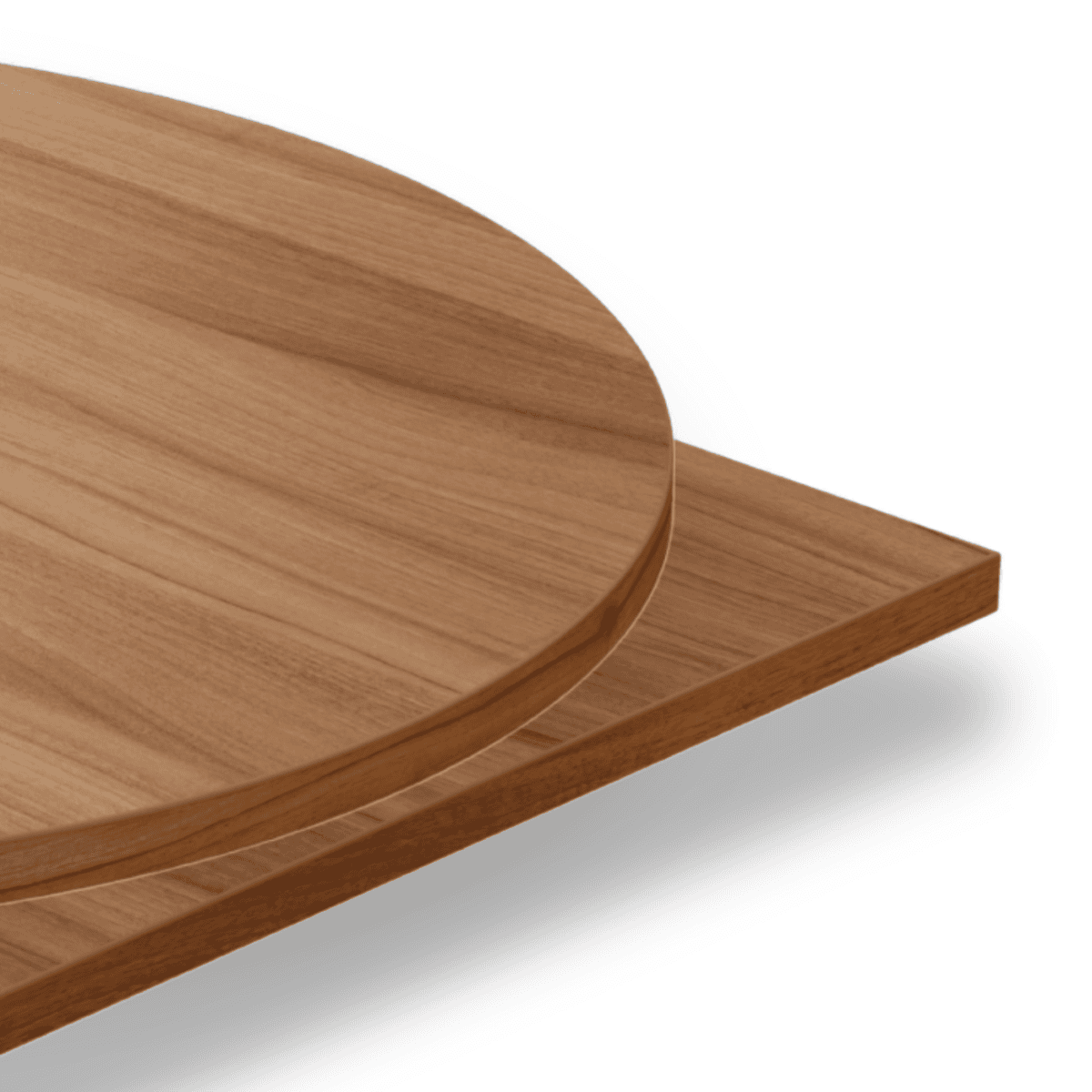




Solid wood brings natural warmth, character and individuality to hospitality, workplace and other commercial interiors. As a natural material, however, it benefits from the right care.
From everyday cleaning to protecting the surface from scratches and managing changes in temperature and humidity, a few simple steps can help maintain the appearance and performance of your solid wood table tops for years to come.
How to Clean Solid Wood Table Tops
Regular cleaning is one of the easiest ways to care for a solid wood surface, particularly in busy commercial environments.
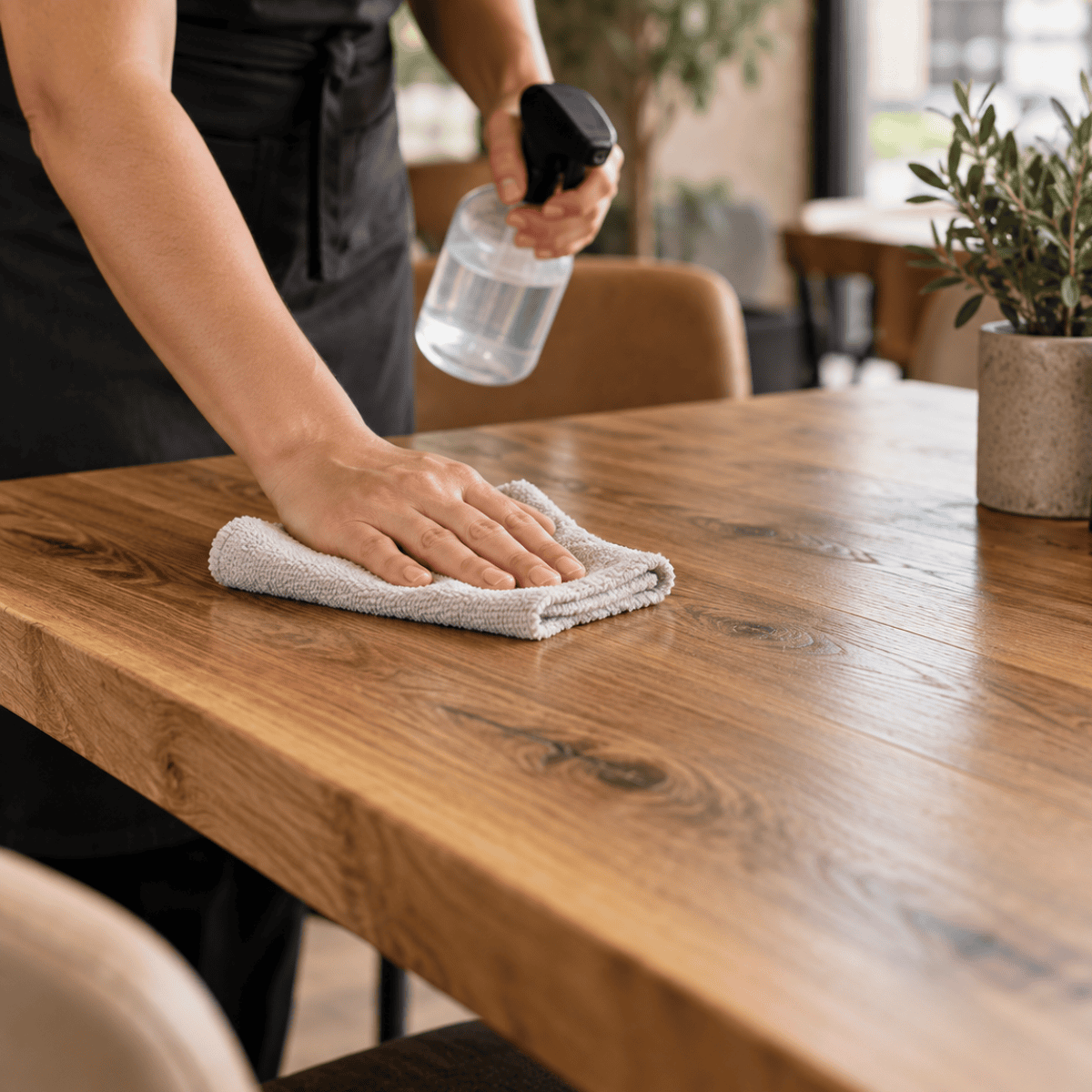
For everyday cleaning, wipe the table top with a soft, damp cloth, avoiding abrasive cloths or scourers that could mark the finish.
When a deeper clean is required, use a small amount of mild dish soap mixed with warm water. Wipe the surface gently before drying it thoroughly with a clean cloth.
Avoid strong chemicals and harsh all-purpose cleaners, as these can damage or gradually affect the finish of the wood.
Protect Your Table Tops from Scratches
Commercial tables naturally experience regular use, but simple preventative measures can help minimise scratches and surface marks.
Coasters and placemats provide an additional layer of protection between the table and everyday items such as crockery, glasses and serving dishes.
Try to avoid dragging objects across the surface, and when placing particularly heavy items on a table, consider using a tray or protective layer to help distribute the weight.
Clean Up Spills Quickly
Accidents happen – especially in cafés, restaurants and other busy hospitality environments.
When liquids are spilled, wipe them away as soon as possible rather than allowing moisture to remain on the surface.
Use a soft absorbent cloth to blot and clean the affected area, then make sure the table top is properly dried.
Taking action quickly can help prevent moisture from penetrating the timber or leaving unwanted marks.
Be Aware of Heat
Solid wood should also be protected from excessive heat.
Avoid placing very hot cookware, serving dishes or equipment directly onto the table top. Instead, use heat-resistant mats, trivets or other protective barriers.
This simple step helps protect the finish while reducing the risk of heat-related marking or damage.
Temperature and Humidity Matter
Unlike manufactured surfaces, solid wood is a natural material that can respond to its environment.
Changes in temperature and humidity can cause timber to naturally expand and contract. Maintaining a relatively stable indoor environment can therefore help reduce the risk of excessive movement, warping or cracking.
As a general guide, the video recommends keeping temperatures between approximately 60–80°F (16–27°C) and relative humidity around 40–60%.
During particularly dry periods, monitoring indoor humidity can be especially important.
Don’t Forget Seasonal Maintenance
It is worth giving solid wood tables a more thorough inspection periodically.
During a seasonal or spring clean, deep clean the surface, check for signs of wear and maintain the finish where required.
During colder months, pay particular attention to indoor humidity, especially in environments where heating systems can make the air significantly drier.
If tables are going to remain unused for extended periods, appropriate protective covers can also help keep surfaces clean and protected.

